Pages

Kamis, 31 Desember 2009


HONDA JAZZ 2009

Honda Jazz 2009
                                                                    

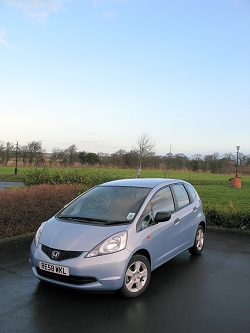
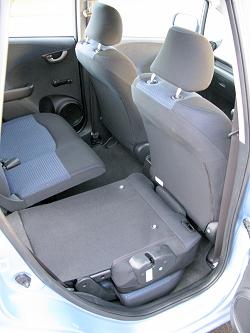
You probably know the spiel by now, but just in case, the previous Jazz sold by the shed load and had the highest customer retention numbers in the class. It was also highly favoured by the sexagenarian set, with an average buyer age of 64. This was largely down to its prodigious-ness in the fields of being spacious, well built and easy to live with. So, in an astonishingly sensible display of Japanese business planning, the new model builds on those strengths; it's now bigger and even more versatile. The one-box shape remains, though it's been given a vague makeover that will probably be neither here nor there to most eyes.


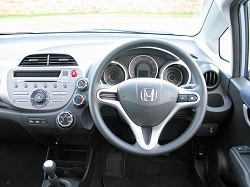
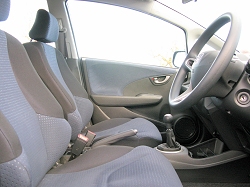
The cabin is refreshed similarly. It's very well built - albeit from hard plastics - and the view out is from a lofty perspective. The window line is low, giving good all-around visibility, though the blind spots at the A- and C-pillars are massive. That said, all the controls are chunky and placed within inches of hands placed exactly at the ten and two o'clock positions.


You probably know the spiel by now, but just in case, the previous Jazz sold by the shed load and had the highest customer retention numbers in the class. It was also highly favoured by the sexagenarian set, with an average buyer age of 64. This was largely down to its prodigious-ness in the fields of being spacious, well built and easy to live with. So, in an astonishingly sensible display of Japanese business planning, the new model builds on those strengths; it's now bigger and even more versatile. The one-box shape remains, though it's been given a vague makeover that will probably be neither here nor there to most eyes.


The cabin is refreshed similarly. It's very well built - albeit from hard plastics - and the view out is from a lofty perspective. The window line is low, giving good all-around visibility, though the blind spots at the A- and C-pillars are massive. That said, all the controls are chunky and placed within inches of hands placed exactly at the ten and two o'clock positions.
Engine & Transmission
                                           

The 89bhp 1.2-litre i-VTEC engine our test car came with feels weak, and its distinct lack of torque (84lb.ft at 4,900rpm) makes the Jazz feel heavy around town. That bugbear is alleviated by two things: a well-weighted, mechanical-feeling gear change that's a pleasure to work; and a willingness to rev freely (albeit slowly) well past 6,000rpm. It's nowhere near quick, but it's economical (53.3mpg) and clean (125g/km CO2).

Ride & Handling


The tranquillity at idle is at odds with the racket the Jazz serves up on the motorway, however. Wind and engine noise at higher speeds are a constant reminder that the Jazz is, despite its gargantuan inner quarters, a city car. Din swirls around the cabin, and the high-sided Jazz tends to get battered by even slight motorway crosswinds. The ride too, though much improved over the last-car's jarring setup, still gets fidgety over bumps. It's mostly comfortable, just easily upset.

It's futile talking at too much length about the Jazz's steering - it is, after all, a car whose remit is space and versatility, not driving prowess. However, handling is as confidence inspiring as the average pre-election promise - the first two inches of travel at either side of the steering wheel don't turn the car so much as tilt the entire body in the opposite direction. The Jazz is, all in all, a pretty uninspiring car to drive. You'd never take it out just for the sake of it.

Equipment, Economy & Value for Money


Value for money is relative, and although the Jazz has quite a high list price (our car came in at £11,131, even though its metallic 'blue rinse' paintjob was the only option), it enjoys class leading residuals. Honda dealers are unlikely to offer a significant discount on the Jazz either, though yours should comfortably last the duration of ownership without developing the irritating mechanical and trim foibles associated with some of its supermini rivals.


Economy is good (assuming you resist the urge to thrash it), and the equipment of the SE spec car we drove is satisfying enough - with alloys, air conditioning, an AUX socket for your iPod (yet nowhere to put it - why do makers do that?). There's also a plethora of airbags and electronic driving nannies to keep you feeling nice and safe.
Overall


The new Honda Jazz smacks of a car made solely for the business of getting from point A to point B as effectively as possible, and it succeeds in doing so in a resounding fashion. For the 90 percent of car buyers who value the advantages of a spacious, well made, comfortable, reasonably priced and unpretentious car, the Jazz is brilliant. The last version's success is testament to that - and this one's better still. On that basis it's a four-star car, easily.
SOURCE:carenthusiast.com

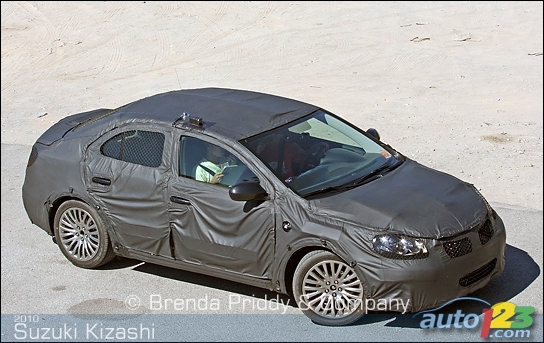
suzuki kizashi 2010

Suzuki Kizashi 2010


Built at Suzuki's brand-new manufacturing facility in Sagara, Japan, the 2010 Kizashi is equipped with a standard 2.4-liter DOHC inline four-cylinder engine offering a more potent standard engine than many competitive best-sellers. The engine employs both an aluminum block and cylinder heads, providing a lightweight installation; aluminum pistons with low tensile force rings deliver improved power and efficiency. Dropped-forged connecting rods, rotating on a forged steel crankshaft, contribute to the inline four's durability, and a balancer shaft delivers improved engine balance and reduced noise, vibration and harshness (NVH).


The responsive inline four is connected to a six-speed manual transmission, for heightened performance in the low gears, along with relaxed — and economical — cruising capability in the higher gears. Customers may opt for an available Continuously Variable Transmission (CVT) that delivers both the driving experience and fuel efficiency today's consumers demand, while not compromising the character preferred by driving enthusiasts. That character is enhanced with paddle shifters, optimizing driver control regardless of speed or driving environment. With either transmission choice, the Suzuki Kizashi is engineered to return competitive fuel economy numbers for fuel-conscious consumers.


In addition to this excellent new powertrain, and to even further enhance the Suzuki Kizashi's strong efficiency story, Suzuki is developing an even more fuel efficient hybrid version that will be added to the lineup in the future.

Design


Suzuki Kizashi's thoughtfully crafted exterior design is best described as the seamless melding of European style and Japanese craftsmanship. Tailored for the driving enthusiast, Suzuki Kizashi's bold and aggressive stance is complemented by available 18-inch alloy wheels; contemporary styling — with its lean proportion and minimal front overhang — injects the sophistication appropriate to a performance-oriented sport sedan. As with the Suzuki Kizashi Concept series, the front end of the production Suzuki Kizashi expresses both strength and style, while the vehicle's impeccably engineered body reflects Suzuki Kizashi's underlying strength and distinctive combination of capability and refinement.
At Suzuki Kizashi's rear, the architecture accentuates the 'sport' aspect of Suzuki's sport sedan. The visual dynamic is enhanced with the addition of an integrated dual sport exhaust, communicating — both visually and aurally — the Suzuki Kizashi's performance-imbued spirit.

The all-new Suzuki Kizashi includes a class-leading list of standard safety equipment, including class-exclusive standard eight airbags, Electronic Stability Program (ESP®), an anti-lock braking system with electronic brake-force distribution, projector beam headlamps and a tire pressure monitoring system.
Also included as equipment on the Kizashi is Suzuki's developed synergetic vehicle dynamic control. This system assists drivers control and a fun-to-drive experience with minimal intrusiveness.


Suzuki Kizashi is offered with Suzuki's next generation i-AWD system, a rare option in its class, as this safety and performance enhancing feature is more typically found among luxury sport sedan offerings. Engineered to provide outstanding traction in inclement weather, the sophisticated all-wheel-drive system also delivers enhanced cornering capabilities. Activated when the driver selects the "AWD" switch on the instrument panel, power to the rear wheels starts immediately upon acceleration. Torque split remains dependent on several factors, including wheel slippage and throttle input.

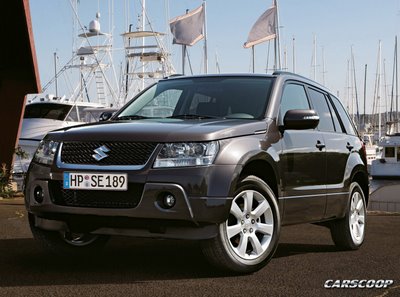
Suzuki Grand Vitara 2010 3 Door


 Suzuki Grand Vitara 2010


The engine is also only marginally larger in size, yet it incorporates a series of features seen for the first time on a Suzuki-designed powerplant. These include a balancer shaft, three-stage variable air intake and a tumble control valve in the intake ports to achieve the best possible fuel-air mixture.
Recognising the life saving potential of electronic stability systems, Suzuki is equipping the 2.4-litre Suzuki Grand Vitara as standard with ESP®, part of a company policy to introduce the system progressively on all forthcoming new models and model facelifts. ESP® uses selective wheel braking and controls engine output as necessary to stabilise the vehicle if it detects understeer or oversteer situations which could possibly result in total loss of control.


Further safety measures have also been upgraded, most notably with the introduction of ventilated rear disc brakes and extra shock-absorbing elements around the bonnet, wings and front bumper to reduce the risk of injury to pedestrians - a quality that had already earned Suzuki Grand Vitara a very respectable three-star rating in independent Euro NCAP crash testing.


Both the exterior and interior have been given a mild facelift. On the outside there is a revised front end treatment and new door mirrors with integrated turn indicators, while inside the cabin chrome and wood-effect inlays add extra touches of quality, together with improvements to the design and operation of some of the dashboard controls, including a new multi-information display and revised air conditioning control panel.


The 2.4-litre model has a high standard specification including an in-dash 6CD player with MP3 compatibility, rear privacy glass and 17-inch wheels. Five-door models additionally feature leather seats with front seat heating; High Intensity Discharge (HID) headlamps, cruise control, 18-inch wheels and electrically-operated glass sun-roof as standard.


                                                                        source:pakwheel.com

SUZUKI ALTO 2010

Suzuki Alto 2010


The new Suzuki Alto has a sporty, solid look that exudes urban energy despite the body's compact dimensions. The design is elegant and beautiful thanks to aerodynamically efficient contours that combine tautness with evocative curviness. It is ideally matched to European tastes and with a drag coefficient of just 0.30 promotes fuel efficiency and low CO2 emissions.
The cabin layout apportions most of the space to the front seats but still provides ample space for four adults. Handy storage spaces for small items are located all around the cabin. Notwithstanding the new Alto's compact exterior dimensions, there's a usable amount of luggage space behind the rear seats, and folding down the rear seatback expands the space into a roomy luggage area suited to daily use.
Suspension


The front suspension is of MacPherson strut type and the large, high-rigidity suspension frame is complemented by further strengthening in the strut mounting areas for superior handling. The rear suspension has Suzuki's proprietary 3-link rigid axle design, and incorporates numerous refinements for the new car. The coil springs and dampers were tuned for optimum handling stability through extensive testing on roads in Europe.
Suzuki targeted handling that makes driving enjoyable on urban roads, so drivers enjoy linear response, gentle roll movements, light steering feel, and good absorption of shock and vibration. These benefits reflect the experience Suzuki has gained in motorsport around the world.
The new Suzuki Alto has a minimum turning radius of just 4.5m making it easy to manoeuvre and park in tight spaces.

Safety


To help the driver avoid hazards on the road, the new Suzuki Alto is available with Electronic Stability Program (ESP®), which modulates the engine performance and applies the brakes during cornering and under aceleration.
In the unfortunate event of an accident, the new Suzuki Alto's body reflects Suzuki's Total Effective Control Technology (TECT) concept in the form of crushable structures that absorb impact energy, frame members that disperse impact energy away from occupants and a strong cabin structure. Use of high-tensile steel for major body parts means the resulting high level of occupant safety does not add excessive weight to the body.
SRS front, side, and curtain airbags are available to reduce the severity of impacts suffered by occupants in the event of a collision. Energy-absorbing trim materials provide further head protection.

2009 BMW 3 SERIES

Introduction


Another year, another round of subtle changes to make one of the most heralded automobiles ever made even better. For decades, the BMW 3 Series has been the benchmark in the entry-level luxury car market -- be it in sedan, coupe, convertible or wagon guise. Typically, this BMW has offered a magnificent blend of restrained luxury, top-notch build quality, just-right size, ample feature content and a ride/handling balance that other manufacturers have been unsuccessfully trying to copy for ages.
For the 2009 BMW 3 Series, a few changes have been made to keep its superior status intact. Some of the sedan and wagon's more questionable styling elements have been rectified. These models receive a new front fascia that's reminiscent of the sexier coupe and convertible, and their streamlined cabooses mark a return to the more attractive BMW tradition of L-shaped taillights. The coupe and convertible have been left alone this year, and that's fine with us, as the sedan and wagon were the only members of the family that needed some cosmetic surgery.
Elsewhere, the much-maligned iDrive electronics interface has been dramatically improved, with more logically arranged menus and buttons surrounding the iDrive control knob that access frequently used functions (radio, navigation, telephone). The navigation system itself is now hard-drive-based and features real-time traffic information.

Safety


Standard safety equipment on the 2009 BMW 3 Series includes antilock disc brakes, stability control, run-flat tires, front-seat side airbags and full-length side curtain airbags. The convertible lacks the side curtains, but the regular front side airbags extend up to head level, and there are also pop-up rollover hoops. The stability control system integrates several features designed to improve braking performance, such as periodically wiping the brake rotors dry when the windshield wipers are in use, and automatically snugging the pads to the rotors when the driver abruptly lifts off the throttle.
In government crash tests, the sedan and wagon received four out of five stars for frontal collision protection and five stars for side protection. The Insurance Institute for Highway Safety gave the 3 Series sedan, wagon and convertible the top rating of "Good" in its frontal-offset crash test. The sedan and wagon also scored a "Good" for side crash protection, but the convertible received a second-lowest "Marginal" score because of insufficient rear seat head protection and possible torso injuries for those in the front.

Interior Design and Special Features


The 3 Series interiors provide a restrained show of luxury. Though a tad plain, the emphasis is on driver comfort and involvement through elements such as supportive seats and clean analog gauges. Materials and build quality are exceptional; even the standard leatherette (vinyl) upholstery looks and feels better than one would expect. The convertible's available heat-reflective leather does a wonderful job of keeping occupants' posteriors cool. This year's revised iDrive electronics interface that comes with the optional navigation system is improved over its confusing predecessor, but it still complicates the stereo controls.
The standard front seats have enough firm support to ward off fatigue during a day's worth of driving, while the optional power-adjustable sport seats are sublimely comfortable. The rear seats are adequately roomy for adults on shorter trips, but taller passengers will wish for more headroom. Trunk space is average in sedans and coupes, while the wagon offers a maximum cargo capacity of 61 cubic feet. The convertible offers a reasonable cargo hold when the hardtop is up, but it predictably shrinks considerably when the top is lowered.

Driving Impressions


There's no going wrong with any of the engines available in the 2009 BMW 3 Series. The naturally aspirated base engine is a little light on low-end torque, but it moves the car smartly once underway and provides laudable fuel economy on the highway. In the BMW tradition, this inline-6 is velvety-smooth from idle to redline, yet the tailpipes emit a purposeful bark under hard acceleration. For the power-hungry, the twin-turbo 335i is a riot, providing the kind of acceleration formerly associated with the high-performance M3. Meanwhile, the late-availability 335d provides face-flattening torque off the line while using the least fuel of the bunch.
No matter which model you choose, the 3 Series' world-class suspension, steering and brakes will provide hours of entertainment on twisty two-lane byways. At the same time, the 3 Series is a wonderful long-distance cruiser, delivering both a supple ride and a hushed cabin. The 3 Series' long-running double act is truly extraordinary: It speaks the language of driving enthusiasts, yet its upscale image and comfortable interior give it unrivaled mass appeal.
SOURCE:edmunds.com